


Tirta Gangga is one of East Bali's most beautiful places to visit, with tiered fountains, stone statues, clear pools, and giant koi swimming through its gardens. Its most recognisable sight is a series of stepping stones that let you walk across a pond, surrounded by stone carvings.
Built as a royal water palace by the last king of Karangasem, Tirta Gangga is more than just a photogenic stop. You can explore its landscaped gardens, learn about its royal history and even take a dip in its spring-fed swimming pool.
If you're planning an East Bali day trip as part of yourBali travel packages, Tirta Gangga pairs well with Lempuyang Temple and the nearby Taman Ujung water palace.
Our best-selling Bali tour packages

Tirta Gangga: Palace, Not Temple

The Tirta Gangga water palace is a royal water garden, not a temple, even though many listings and signposts call it one. It was built by the last king of Karangasem as a place of pools, fountains and gardens fed by a sacred spring.
The name joins two ideas: "tirta" means holy water, and "Gangga" refers to the Ganges, the sacred river of India.
That difference shapes how you behave there. You do not need a sarong to walk the gardens, as you would inside a temple such asTirta Empul, where visitors join a purification ritual.
But the spring is still holy to the Balinese, a small shrine sits within the grounds, and local families come here on ceremony days. Dress modestly, keep your voice down near the spring, and do not climb on the statues.
A Short History

Construction began in 1946 under Anak Agung Anglurah Ketut Karangasem, the last king of Karangasem, who also built the Taman Ujung water palace on the coast nearby. The garden grew in stages over the following years, with pools and fountains laid out on terraces down the hillside.
Earthquakes from the 1963 eruption ofMount Agung, which looms over the area, badly damaged the complex, and work stopped for lack of funds. It opened to the public in 1970, and restoration resumed in 1979. The garden you see today is largely that rebuilt version, and the royal family's descendants still look after it.
A small museum, the Asta Gangga Museum, opened on site in December 2024 with Balinese artefacts and a statue of the 14th king of Karangasem.
Tirta Gangga Entry Fee and Timings

The Tirta Gangga entry fee for foreign adults is IDR 90,000 (about ₹475) as of November 2026, in force since 1 March 2025. Opening hours are 7 am to 7 pm daily, according to the official Indonesia tourism site.
Ticket | Price (IDR) | Approx. in ₹ |
Foreign adult | 90,000 | ₹475 |
Foreign visitor over 65 | 70,000 | ₹370 |
Foreign child, 5 to 12 years | 45,000 | ₹235 |
Domestic adult | 45,000 | ₹235 |
Children under 5 | Free | Free |
Car parking | 5,000 | ₹26 |
Motorbike parking | 2,000 | ₹11 |
Boat rental on the pond | 20,000 | ₹105 |
Rupee figures are based on an exchange rate of about 190 rupiah per rupee as of November 2026.
What the ticket includes: entry to the gardens and pools, the museum, and use of the spring-fed swimming pool.
What costs extra: fish food (sold at small stalls inside, usually IDR 5,000 to 10,000), boat rental, and any drone filming or pre-wedding shoot, which the management may charge for separately. Pay in cash, as card payments are not always available at the gate.
Fees have gone up twice in two years. Foreign adult entry rose to IDR 70,000 on 1 January 2024 and to IDR 90,000 on 1 March 2025, so check the board at the entrance before you pay.
Tirta Gangga Stepping Stones Photo Tips

The Tirta Gangga stepping stones are the reason most people come, and they are busiest from late morning to early afternoon. Most East Bali tours visit Lempuyang at dawn and arrive here between 10 am and noon, which is precisely when the queue forms.
The fix is simple: be on the stones before 10 am. The gates open at 7 am, the light is soft, the pond is still, and you may have it nearly to yourselves. If you are combining it with Lempuyang, the day plan below gets you here in time.
A few tips from the stones themselves:
•Feed the koi for the photo. Scatter a little fish food just before your shot and the koi rush to the surface around your feet. The fish are huge and harmless.
•Mind your footing. The stones are often wet, slightly uneven and spaced a stride apart. Wear sandals with grip, not flip-flops, and keep phones on a strap.
•Shoot from the bank. The best frame is usually from the edge of the pond, looking along the line of stones with the gate and the statues behind.
•Be quick when it is busy. Locals and other visitors queue politely; take a few shots and step off.
If you are building a photo day, our guide to the best places to visit in Bali has more ideas across the island.
Gardens Beyond the Famous Pond

Most visitors take their stepping-stones photo and leave. Spend another twenty minutes and you will see the best of the garden:
•The eleven-tiered fountain at the centre of the complex is a tall stack of spouts and the focal point of the main pool.
•The guardian statues lining the ponds, carved demons and mythical figures half-submerged in the water.
•The upper terraces, quieter lawns and pools climbing the hill, with views across the garden and, on a clear day, towards Mount Agung.
•The spring itself, at the top of the complex, where the holy water emerges.
•The museum is a short, shaded stop if it starts to rain.
Can You Swim at Tirta Gangga?

Yes, in the designated spring-fed pool on the middle level of the garden. Pool use has been included in the entry ticket since the March 2025 fee change, so you no longer pay separately. The ponds with the stepping stones and koi are not for swimming.
The pool is natural spring water, cool and not chlorinated, so it can look greenish. Some visitors love it, others prefer to look. Bring your own swimwear and a towel; there are basic changing rooms nearby. Swim modestly, as local families use the pool too.
Lempuyang and Tirta Gangga Day Trip

The classic East Bali day trip pairs Tirta Gangga with Lempuyang Temple, home of the "Gates of Heaven". The two are only about 10 km apart, around 25 to 30 minutes by car. The trick is the order and the timing.
Time | Stop | Why |
3:30 to 4:30 am | Leave south Bali or Ubud | Reach Lempuyang near dawn |
6:00 to 8:00 am | Lempuyang Temple | Sunrise light, shorter photo queue |
8:30 to 10:00 am | Tirta Gangga | On the stones before the 10 am tour crowd |
10:30 am to noon | Taman Ujung (optional) | The coastal royal water palace |
Noon to 1:30 pm | Lunch near Amed or Abang | Rice-terrace views or seafood |
Afternoon | Drive back | Two to three hours to the south |
Lempuyang's photo queue can stretch for hours, so the earlier you get there, the more time you have at Tirta Gangga before 10 am. Our Lempuyang guide covers the queue, the shuttle and the dress rules in detail.
For a third stop, Taman Ujung, built by the same king on the coast about 20 minutes away, is larger, more open and usually far quieter. Its pavilions sit among wide lawns and lily ponds with the sea beyond, and it rarely sees a morning crowd. It suits a slower late morning, before the midday heat sets in.
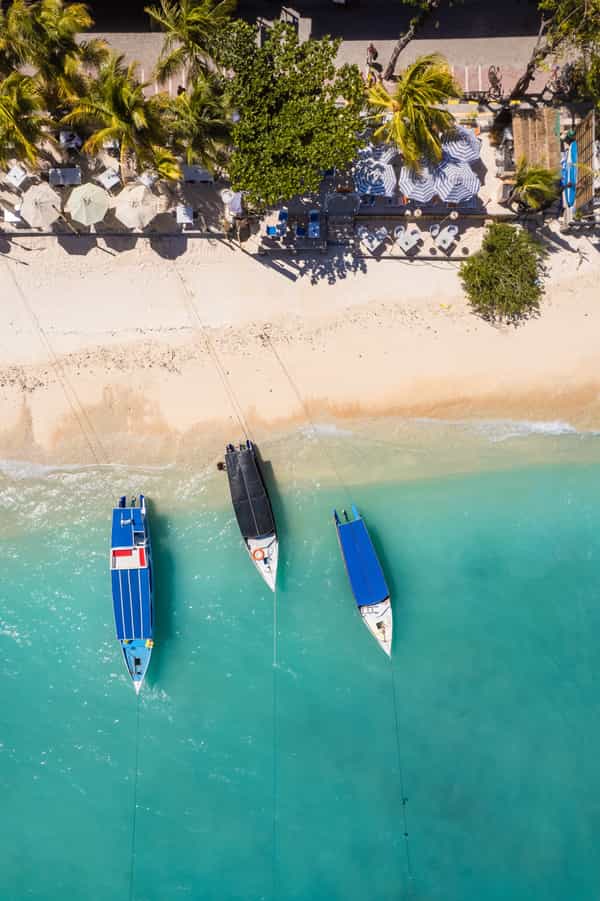
If you prefer the sea, head instead to Amed, about 30 minutes north. Its black-sand beaches are calm in the morning, the reef starts a few metres from shore, and local boats line the sand. Bring reef shoes, as the shore is pebbly, and rent a mask and fins from the shops along the beach road. Snorkellers can swim straight out from the beach to the Japanese shipwreck.
Getting There and Where to Eat

Tirta Gangga sits in Ababi village in the Abang district of Karangasem, about 75 km from Denpasar. There is no practical public transport, so most visitors hire a private driver for the day, which typically costs IDR 600,000 to 800,000 (about ₹3,150 to ₹4,200) for a car with a driver.
Starting point | Approx. drive time |
Ubud | 1.5 to 2 hours |
Sanur | About 2 hours |
Seminyak, Kuta or Canggu | 2.5 to 3 hours |
Ngurah Rai airport | About 2.5 hours |
Lempuyang Temple | 25 to 30 minutes |
Amed | About 30 minutes |
Drive times grow in the afternoon and on weekends, so leave room in your plan.
Where to eat: a few simple restaurants sit right outside the entrance, and several warungs on the hill roads above Abang look across rice terraces towards Mount Agung. Expect Balinese and Indonesian dishes such as nasi campur and mie goreng at local prices. If you want seafood, Amed's beachfront restaurants are a short drive away.
Staying overnight in the area, whether in Tirta Gangga village or Amed, lets you visit at 7 am without a 4 am start.
Best Time to Visit Tirta Gangga
The dry season, roughly April to October, gives the clearest skies, the best chance of seeing Mount Agung and the easiest roads. The wet season, November to March, brings afternoon storms, but the gardens are at their greenest and mornings are often clear, so visit early.
On Balinese ceremony days, the spring and shrine area may be busy with worshippers. Watch quietly and give them space.
For couples, Tirta Gangga makes a lovely slow morning, especially paired with Taman Ujung. Our list of places to visit in Bali for honeymoon has more romantic stops for you to add in your itinerary.
Frequently Asked Questions
What is the entry fee at Tirta Gangga?
IDR 90,000 for foreign adults, as of November 2026. Children aged 5 to 12 pay IDR 45,000, visitors over 65 pay IDR 70,000, and under-fives go free.
Can you swim at Tirta Gangga?
Yes, in the spring-fed pool on the middle level. Pool use is included in the entry ticket.
Is Tirta Gangga a temple or a palace?
A royal water palace. The last king of Karangasem built it, though it has a sacred spring and a small shrine.
What time should I visit Tirta Gangga for the stepping stones?
Before 10 am. The gates open at 7 am, and tour groups usually arrive between 10 am and noon.
How far is Tirta Gangga from Lempuyang Temple?
About 10 km, or 25 to 30 minutes by car, which makes the two easy to combine.
How long do you need at Tirta Gangga?
About one to one and a half hours. Add another hour if you plan to swim or visit the museum.
Can you feed the koi at Tirta Gangga?
Yes. Fish food is sold inside for around IDR 5,000 to 10,000 a bag.
Who built the Tirta Gangga water palace?
Anak Agung Anglurah Ketut Karangasem, the last king of Karangasem, from 1946. It was restored from 1979 after damage in the 1963 Mount Agung eruption.
Is Tirta Gangga worth visiting after Lempuyang?
Yes. It is only 25 to 30 minutes away, and its gardens make a calm contrast to the temple queues.
What should I wear at Tirta Gangga?
Modest, comfortable clothes and sandals with grip. A sarong is not required in the gardens, but bring swimwear if you plan to use the pool.


